





Nicosia is Europe’s last divided capital, and you can cross the line on foot. Halfway up Ledra Street, the main shopping street of the walled old town, you show a passport at a booth, walk a short stretch of UN buffer zone, and carry on up the same street in the north, where the signs switch to Turkish and the money to lira. The Venetian walls still ring the whole old town, and two nights is about right to cover both halves of it without hurrying.
Most people do Nicosia as a day trip from the coast. Stay over instead. The old town is at its best after dark, and the best of the museums open early, before any coach from Ayia Napa can get there.
When to go
Spring (March to early June) and autumn (late September to early December) are the comfortable windows. July and August daytime highs average around 37°C, with almost no rain and little shade inside the walls. The weeks to avoid are the middle of August, unless the plan is museums and air-conditioning.
What’s on through the year:
- Summer: the municipality’s free Summer Nights evenings around the city, July to September.
- September: Septemberfest at Akadimias Park; Antama Fest in the Municipal Gardens.
- Mid-September to the start of November: the Nicosia International Festival, the city’s signature event: theatre and performance from Cyprus, Greece, Lebanon and further afield (the 2026 run is 12 September to 1 November).
- October: ArtCargo and the WIP Arts & Technology Festival (both 16–25 October in 2026), and Pame Kaimakli in the old Kaimakli neighbourhood.
- December: a Christmas village in Laiki Geitonia, a market on Eleftheria Square, and Christmas at Chrysaliniotissa.
Dates move year to year; check visitnicosia.com.cy before you book around one.
Where to base yourself
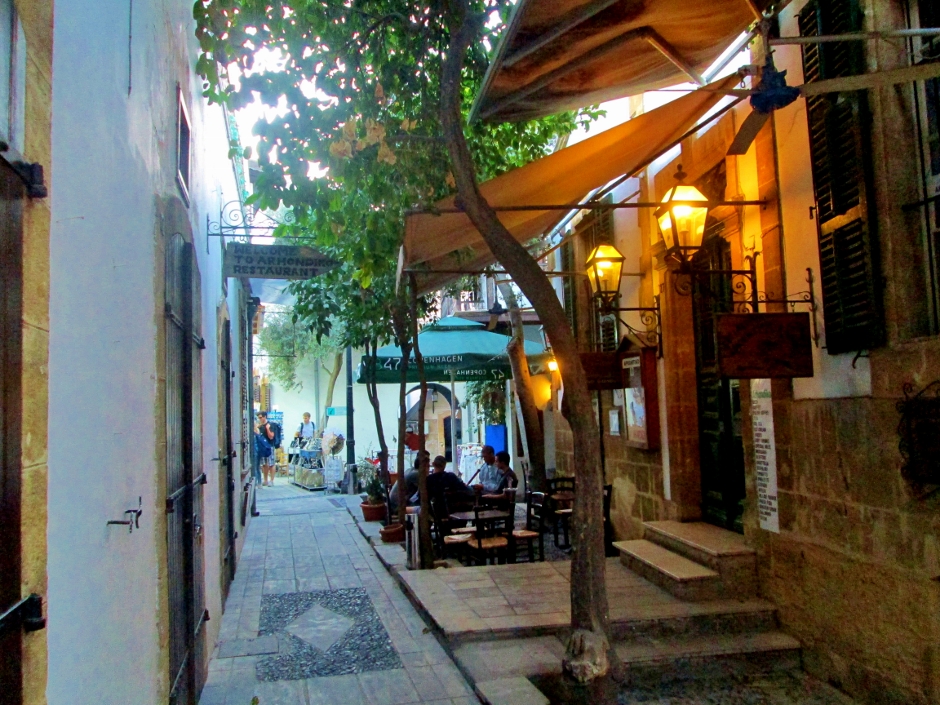
- Old town, near Faneromeni and Laiki Geitonia: walk out of the door and you’re on Ledra Street. Bars run late on the streets around Faneromeni, so ask for a room off the square.
- Just inside the walls, east side: quieter, and closer to the Archbishopric and Chrysaliniotissa for the Day two walk.
- New town, south of the walls: bigger hotels with pools and parking, ten to twenty-five minutes on foot from Ledra Street. Worth it from June to September, when a pool stops being a luxury.


Where to stay
Old town
- Gate Twenty Two Boutique Hotel
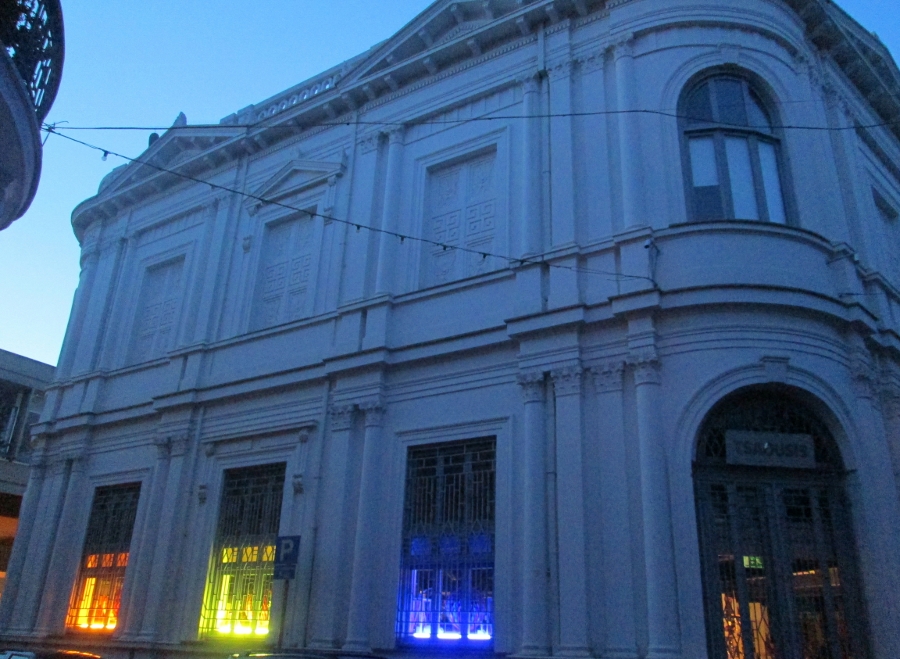
32 rooms in the restored Lyssarides Building, with a rooftop bar on the eighth floor.
- Centrum Hotel – City Center
A three-star at 15 Pasikratous Street, a few steps from Ledra Street; consistently well rated.
Everything in the area
Where to stay
New town
- The Landmark Nicosia, Autograph Collection
The big one, with pools, gardens and a spa.
- Cleopatra Hotel
On Florinis Street, about ten minutes' walk from Ledra Street. Free parking, and a pool that's open from late May to the end of September. The rooms are dated.
Everything in the area
The searches open without dates and ask for yours. Booking.com links can earn Two Nights In a small commission, at no cost to you; Airbnb's earn nothing.
Day one: across the line and back
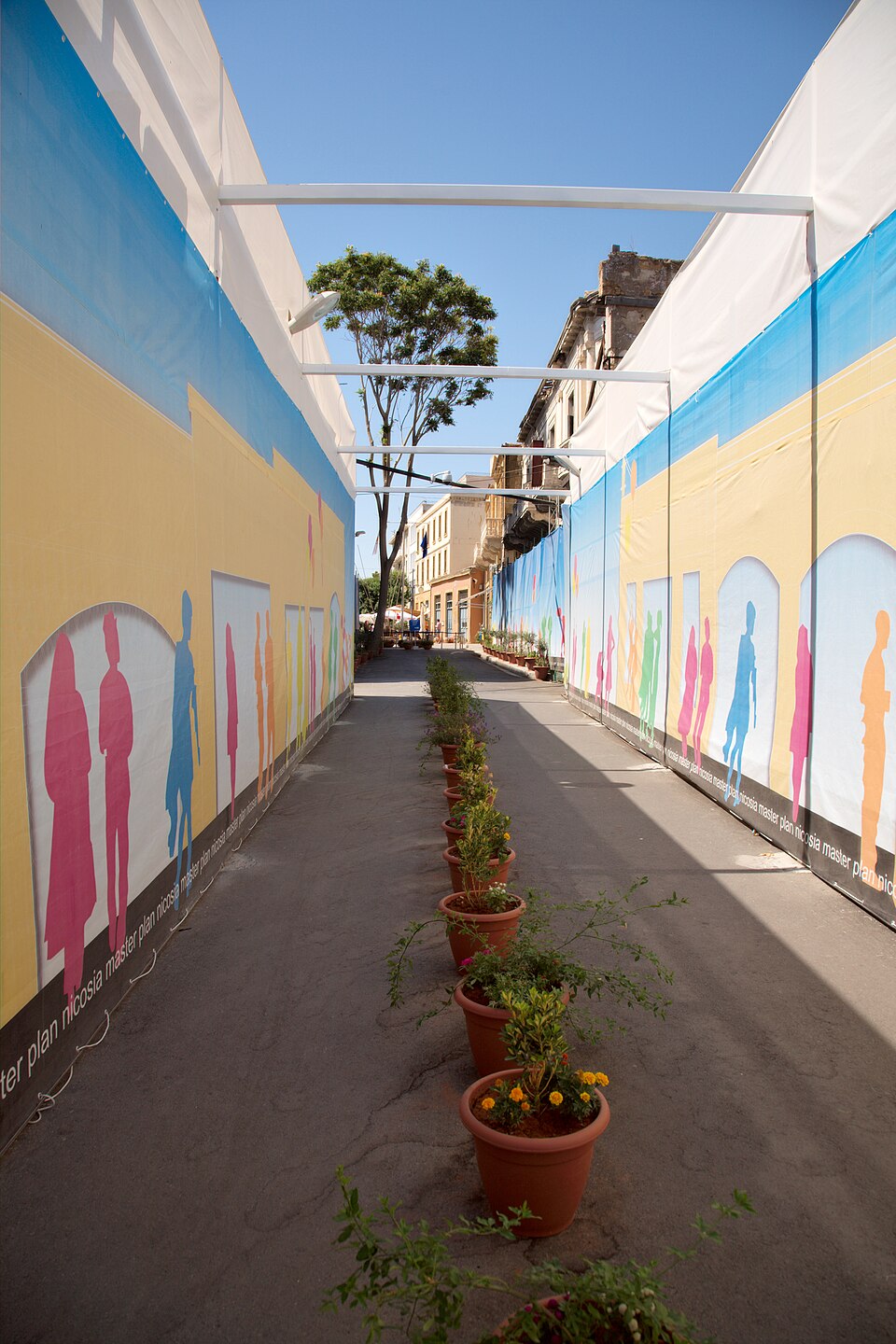
Late morning: Ledra Street crossing. Bring your passport. The check takes a few minutes, but in summer the queue is the slow part, so cross before midday.

Lunch: Saraba, on Zühtüzade Street. This is a modest home-cooking place in the north (ev yemekleri means home dishes): hearty village food, open in the daytime only (Monday to Saturday). Order the molehiya, a lamb and greens stew, or the mixed plate with Cypriot köfte made from bulgur, mince and potato. Bring some Turkish lira.
Afternoon: Büyük Han, Bandabuliya, Selimiye.
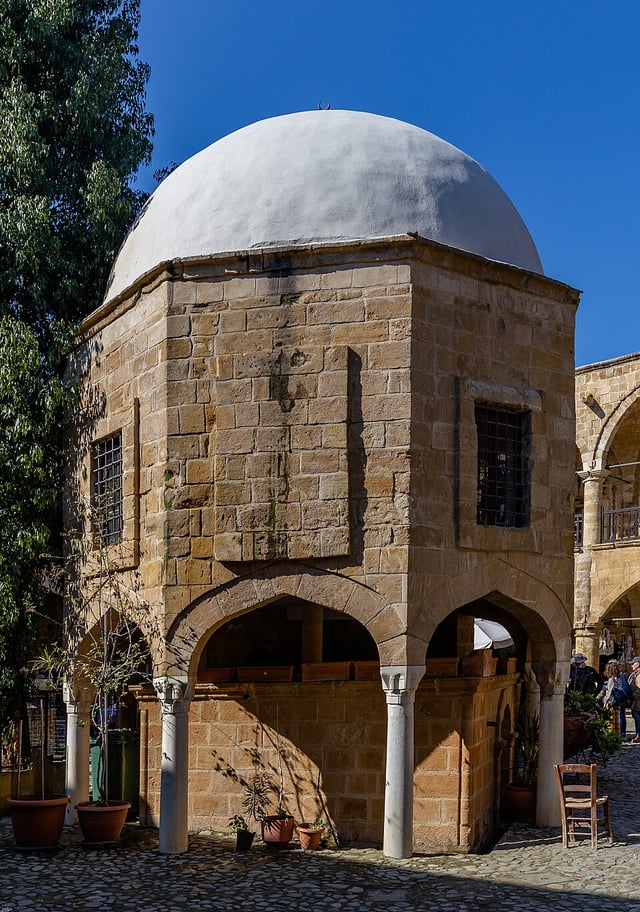
- Büyük Han (the Great Inn, 1572) is an Ottoman caravanserai built around a two-storey colonnaded courtyard, with a small mosque in the middle. Today the rooms are craft shops and the courtyard is cafés, so have your coffee here.
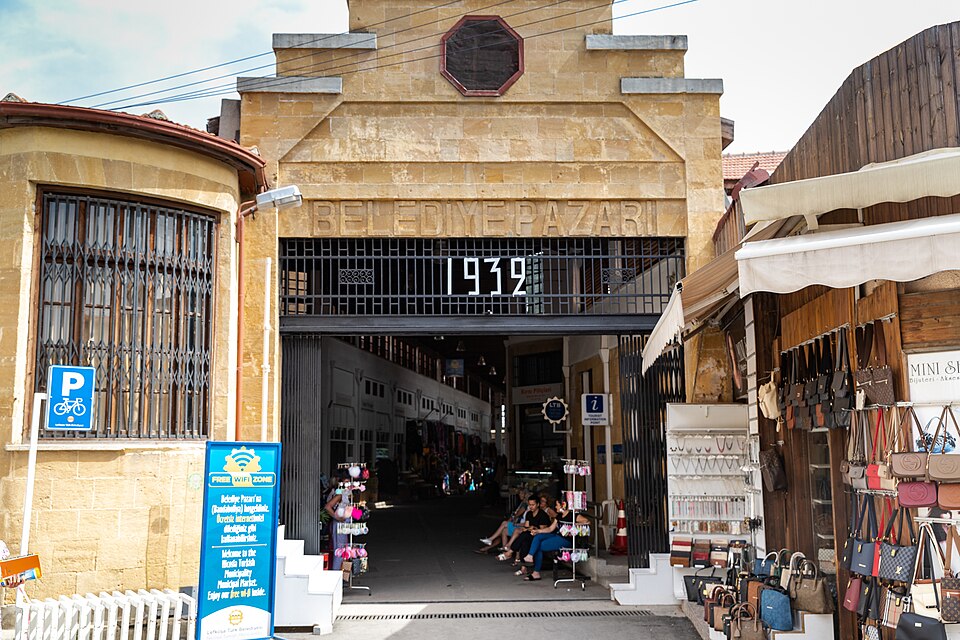
- Bandabuliya, the covered market beside the Selimiye, a couple of minutes’ walk away, went up under British rule in 1930–32 and reopened after a renovation in 2012. It now holds about seventy stalls, cafés and bookshops.
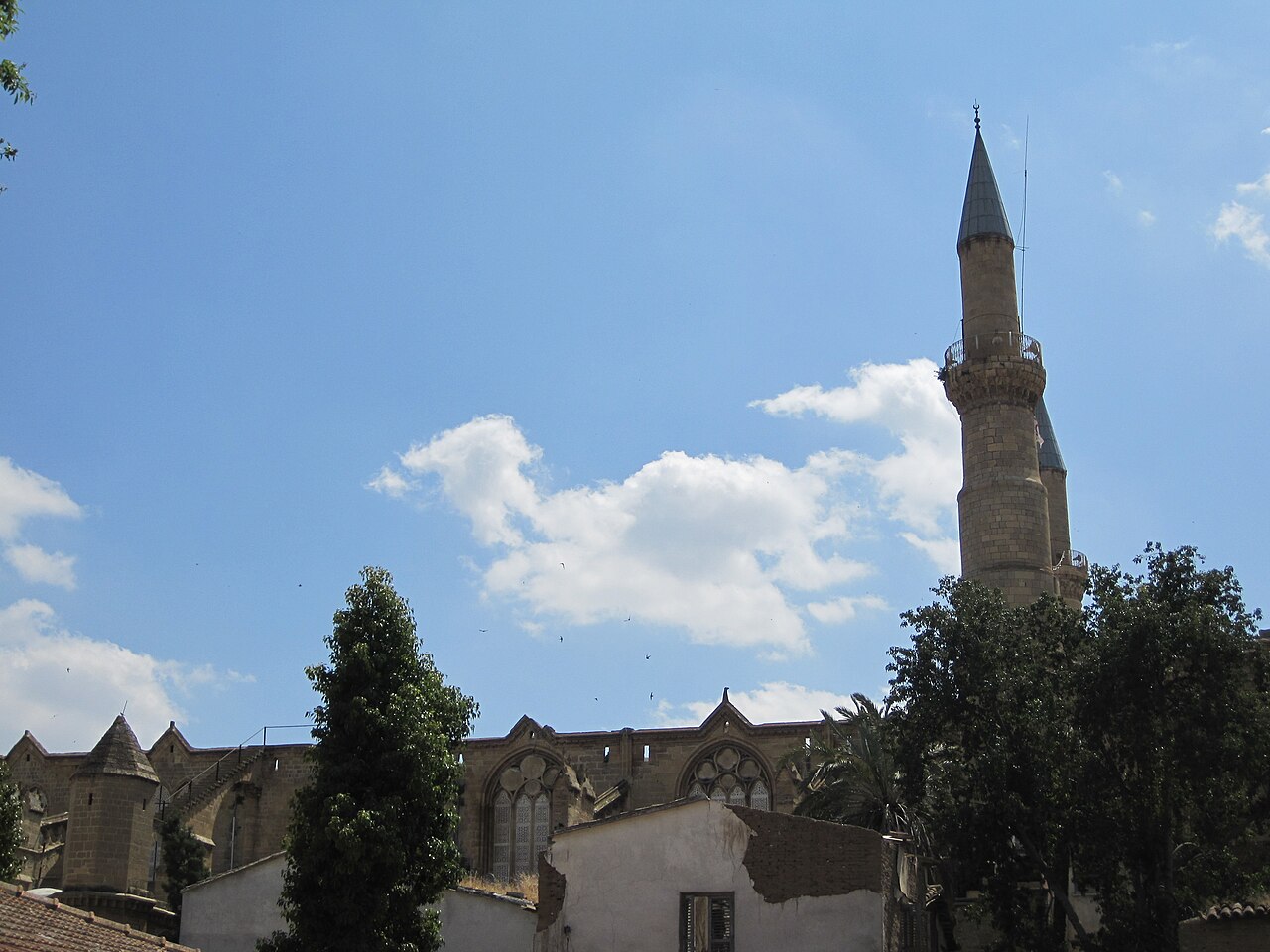
- Selimiye Mosque began as the Gothic cathedral of St Sophia and became a mosque under the Ottomans. It reopened in May 2025 after years of restoration. Entry is free; take your shoes off, cover up, and avoid prayer times.

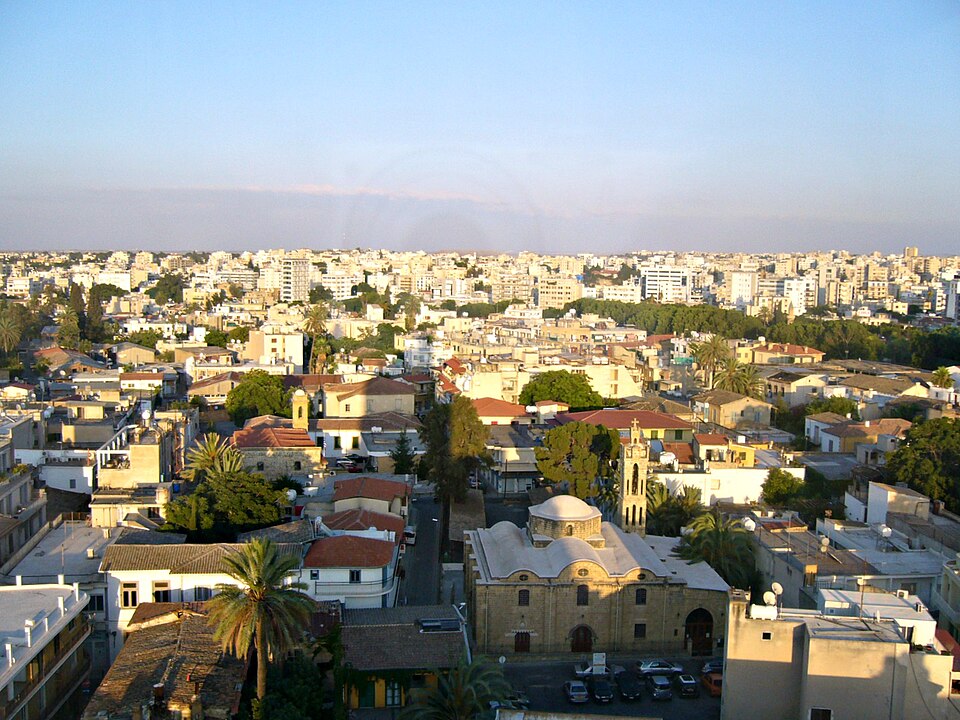
Early evening: Shacolas Tower, 11th floor. Cross back south. The observatory near the foot of Ledra Street is the one place to see the whole divided city at once: the walls, the buffer zone, the minarets of the north. You pay at the top, about €2.50 on recent visits. Closing time is 18:00 in October and earlier in winter, so time it for the last light, and expect some glare on the glass.

Dinner: Piatsa Gourounaki, 92 Faneromenis. This souvlaki house is always full. You order meat by the skewer, portions are generous, and there are no reservations, so arrive early or wait. Afterwards, stay for a drink on the streets around Faneromeni, which fill up late.
Day two: museums, then the quiet quarter
Morning: Cyprus Museum. This is the island’s main archaeology museum, just west of the walls. It opens at 08:00 from Tuesday to Friday (09:00 Saturday, 10:00–13:00 Sunday) and is closed on Mondays. In February 2026 its main exhibition was upgraded, and it now shows a copper ox-hide talisman repatriated from California.
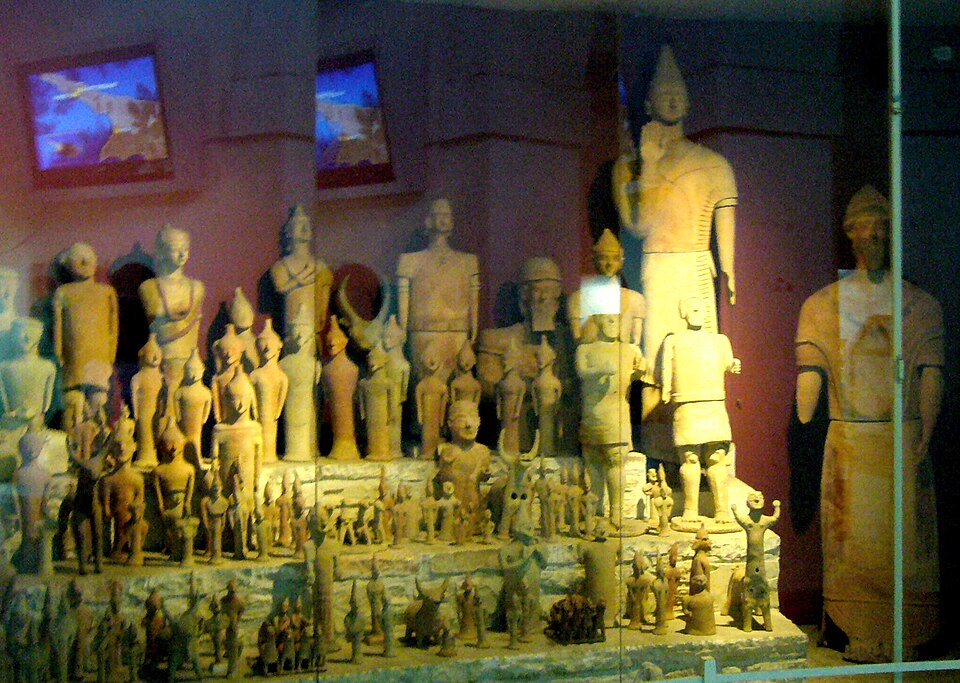

Late morning: Leventis Municipal Museum, Laiki Geitonia. The city’s own history museum. It’s open Tuesday to Sunday, 10:00–16:30.
Lunch: To Anamma. An enclosed backyard taverna at 89 Ledra Street, a block from Faneromeni church, known for meze, grilled halloumi and souvlaki. It’s open from noon.
Afternoon, the part most visitors miss: Chrysaliniotissa. Walk east inside the walls, away from Ledra Street, and the crowds drop away.
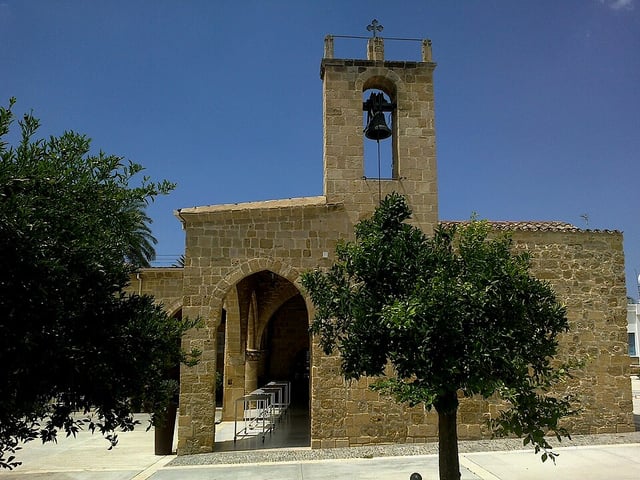
- Panagia Chrysaliniotissa is usually called the oldest Byzantine church in Nicosia, traditionally said to have been founded in 1450 by Queen Helena Palaiologina, though the building is probably centuries older. It’s known for its icons.
- Nearby, the House of Hadjigeorgakis Kornesios (1793), home of the Ottoman-era dragoman of Cyprus, has been closed for technical issues since September 2026. Check visitcyprus.com before you go; if it has reopened, the carved and gilded reception room is the reason to.
- If there’s time and an exhibition is on (Wednesday to Sunday), the Nicosia Municipal Arts Centre (NiMAC), in the city’s old power station, is on the way back.
Departure: allow about an hour and a half to Larnaca airport: a taxi to the Kapnos station on Kyrenias Avenue, then 40–50 minutes on the shuttle.
Getting there
From the UK you fly into Larnaca, not Nicosia. Nicosia’s old airport, inside the UN buffer zone, has been out of use since 1974.
- Flight time: about 4 hours 40 minutes direct from Heathrow (British Airways), with Jet2 from Stansted and roughly 4h50 from Luton (Wizz Air, easyJet).
- Time difference: Cyprus is 2 hours ahead of the UK all year.
- Airport to city: the Kapnos Airport Shuttle takes 40–50 minutes and costs around €9–10. A taxi is around €55–75.
- Plan the whole thing, door to door, on the Nicosia page.
Practical basics
| Currency | Euro in the south. The north uses the Turkish lira |
| Plugs | Type G, 230V: the same as the UK, no adapter needed |
| Driving | On the left |
| Emergency | 112 or 199 (police, fire, ambulance) |
| Language | Greek in the south, Turkish in the north; about two-thirds speak English |
| Time zone | UTC+2 / +3 in summer (2 hours ahead of the UK) |
| Crossing | Passport or EU ID card for Ledra Street |
FAQ
- Is two nights enough for Nicosia?
- For the walled city, yes. Two nights gives you one day for the crossing and the north and one for the museums and the quiet east side. Add a third night only if you want a day trip into the Troodos or up to Kyrenia.
- What's the best area to stay in Nicosia?
- Inside the walls, between Faneromeni and Laiki Geitonia, for walking everywhere. Pick the new town south of the walls if you're coming in summer and want a pool and parking.
- Is Nicosia expensive?
- Less so than the coast. Souvlaki at Piatsa Gourounaki is a meal for two at a reasonable price, the Shacolas observatory costs a couple of euros, and the Selimiye is free. Hotels inside the walls are mostly small three- and four-stars.
- When is the best time to visit Nicosia?
- March to early June, or late September to early December. Autumn has the Nicosia International Festival as well. Avoid mid-August, when highs are around 37°C.
Save it as a trip
Two nights only works if you don’t spend them deciding. Open Nicosia on Two Nights In, save Saraba, Büyük Han, Piatsa Gourounaki and Chrysaliniotissa into a trip, and share it with whoever’s coming. You’ll both see the same map. More of the island is on the Cyprus page.
Find your next somewhere.